Can We Speak to Younger Students about Racism?

Can We Speak to Younger Students about Racism?

No one knows how the new academic year of 2020-2021 will start off. Most administrators have designed a Plan A, Plan B, and Plan C. One thing is for sure, most of our students will have been on summer vacation during the protests that emerged around the country after George Floyd’s tragic death. Many may well have missed an opportunity to discuss racial discrimination with their teachers. Whatever form school takes this fall, we should not pass up the opportunity to engage our students in a discussion of racial and economic injustice.
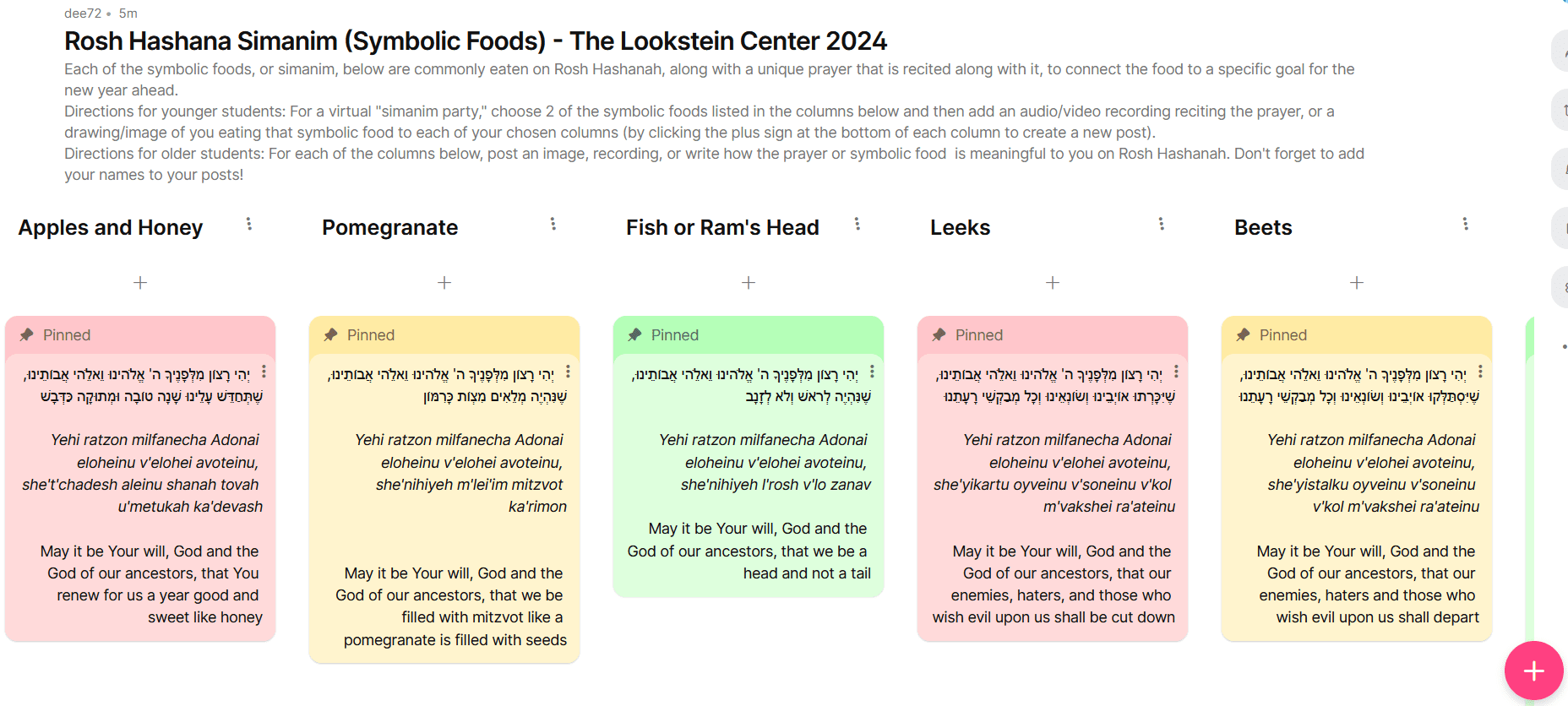
Rosh Hashanah Simanim Padlet

Rosh Hashanah Simanim Padlet

Follow the instructions at the top of the Padlet below for an interactive, collaborative review of symbolic Rosh Hashanah foods known as "simanim."To share the link with your students, click the "Share" button on the top right corner and copy the link (make sure that...

From the Editor📄

From the Editor📄

Six months ago, when we first began planning this issue, we were focused on resilience of individuals, particularly in educational setting. The original introduction included a story about a thirteen- year-old who had a bad morning and didn’t want to go to school, who ultimately pulled herself together and had a fabulous day. The articles we looked for included personal stories about resilience, educational strategies for building resilience, and whether resilience can be taught. Little did we, or anyone, understand then just how critical this topic would become in such a short period of time.

The Roots of Resilience📄

The Roots of Resilience📄

It was about five years ago. Within a very short time, I lost my significant other, my home, and my long-time community. You may imagine that losing so much of what defined my life, especially the way it happened, would traumatize me forever. Five years later, I am—with the help of God, my children and friends, and my new community—thriving. I am blessed in my professional work to create meaningful change in Jewish day schools, and I am similarly blessed in my personal life with a rich, robust set of relationships and volunteer opportunities. I share here some methods I used for combatting post-traumatic stress and for building resilience in myself and my children. Everyone experiences stress if not outright trauma, and I hope readers find some helpful insights to help themselves and their students confront tough times.

Learning to Flourish and Flourishing to Learn📄

Learning to Flourish and Flourishing to Learn📄

As I’m about to walk into my son’s school to discuss how they can best support him to be successful in high school, I keep thinking “What is success?”, “What does it look like?”, “What do I want them to know about my son?”. The more I think, the clearer it is to me that success is not reflected in test scores, which college he will attend, or how much money he will make. When I think about my children’s success I think about them having the ability to solve problems, to adapt to different situations, to have empathy, to know how to interact with others in a positive way, to be assertive, and most of all, to be resilient.

Methods of Teaching Grit in Judaic Studies 📄🎬

Methods of Teaching Grit in Judaic Studies 📄🎬

Championed by leading scholars of positive psychology, the teaching of grit involves teaching students how to persevere in the face of challenge. Research has shown a person’s ‘grit’ to be a greater indicator of success than academic prowess. Increasingly, “soft skills” such as grit, optimism, creativity, and social-emotional learning are gaining significant share and emphasis within school curricula. Innovative initiatives, such as the CASEL standards, are paving the way for schools to consider the wellbeing of their students in new and exciting ways.

Building Self-Efficacy in the Classroom📄

Building Self-Efficacy in the Classroom📄

Tova was 14 years old, bright, driven, and, most apparent to me, conspicuously loud. Whether it was her mood, her weekend plans, or how many hours she studied for Chumash, she made sure we knew. As her Algebra teacher, helping Tova find the right space and time for these comments was paramount – a loud student breaks the flow of a class like a cell phone ringing in (what I hoped was) an engaging program with an impending punchline.

Are safe spaces dangerous? 📄🎬

Are safe spaces dangerous? 📄🎬

When I first encountered Dr. Jay Ellison’s letter to accepted students at the University of Chicago, I applauded its audacity. Dr. Ellison informed incoming students that, “we do not condone the creation of intellectual ‘safe spaces’ where individuals can retreat from ideas and perspectives at odds with their own.” The letter persuasively explored how retreating from intellectual conflict stifles the development of resilience and grit.

Secret Link