

Choice in the Middle School Beit Midrash
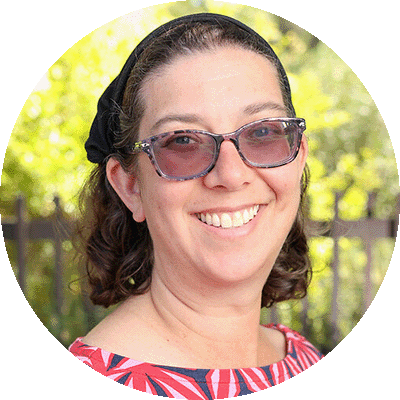
Tamara Beliak is the Dean of Beit Midrash at Oakland Hebrew Day School (Oakland, CA). Dr. Beliak coordinates the Judaic Studies Beit Midrash program for Middle School students and serves as a mentor teacher on the Educational Leadership Team. Prior to teaching at OHDS she received a doctorate at Yeshiva University.
In a small Jewish day school, differentiation is a fact of life. Some of our students have diagnoses which explain why they have challenges in learning and some do not; some need lots of repetition of material in order to synthesize ideas and others seem to understand and be prepared to explain the content the first time they read or hear an idea. In our small community, some are able to thrive in a Hebrew immersion class while others begin to shut down in this environment. A typical curricular model in middle schools at small Jewish day schools is to offer grade-specific Jewish studies courses; this has the advantage of all students being exposed to the same content, and building upon past learning is an easier task. At Oakland Hebrew Day School (Oakland, CA), a K-8 school, we, too, had this model until ten years ago, when we found ourselves grappling with the following issues:
- How do we create more social opportunities for students when class size is between 10-20 students per class?
- How do we spark more internal motivation and personal ownership for Jewish studies learning?
- How do we better diversify the options of Jewish learning?
We decided to try what we call the Beit Midrash model in which student agency in learning is at the foundation. The model is built on three core components: 1) students are placed in classes by student choice rather than by grade, 2) every class integrates hevruta learning, and 3) some classes are tracked by Hebrew skill level but others are not.
Choice
We have three trimesters (zmanim), in which students take three Jewish studies classes per zman. Before the beginning of the zman, students read the course descriptions of each of the class options and then rank their first to third choice (see sample courses here). We believe that when students are invested in what they are learning, they engage with more enthusiasm and ultimately learn more. In a recent survey of students one wrote, “I really love being able to choose my own Judaic studies classes and electives. It gives kids independence and a say in what they get to learn about.”
Hevruta
The second foundation of our program is hevruta. Students are responsible for their own learning but also the learning of their peers. While students do not learn all of the same texts as each other, students must fulfill a distribution requirement of Torah, Nakh, Jewish History, Halakha and Torah SheBe`al Peh—there are few specific required classes and students are not required to take them in a particular sequence.
Choice of language
Required classes are offered with two sections, one taught in Hebrew and one taught in English. Teachers develop the classes based on the required subject areas but also based on texts that they are passionate about and that they feel will both engage students and encourage them to build skills. For example, some of the classes that have been developed in Tanakh are focused on the lives and challenges of specific characters like Yehudah and Yosef while others are focused on difficult events like Het HaEgel (Sin of the Golden Calf) and Het HaMeraglim (Sin of the Scouts). We have a teacher who works as an administrator keeping track of student requirements and letting students know which requirements they have completed and which they still need to complete. In any given year there are at least two courses out of nine that students take which do not need to fulfill a specific requirement. This way, they can take extra courses in their area of interest, whether that be Tanakh, Torah SheBe`al Peh, Jewish History, or Jewish Thought.
One additional feature is an independent study option. Students submit a proposal to study a topic of interest with a hevruta. We require them to work with a partner in order to study in conversation. Students develop a topic and suggest source texts. They are required to investigate their topic in advance to identify ideas for the sources they will learn. The independent study blocks have a mentor who suggests additional sources and guides the pace and depth of the learning. At the end of the zman, the hevruta is required to present some aspect of their learning to the entire middle school and share their interests, challenges, and some of the acquired knowledge in a dynamic way.
One project last year did a deep dive into the history of antisemitism and how it has manifested in various times in history. The students in that hevruta read books, watched videos, and ultimately developed a class to teach other students definitions of antisemitism and practice ways to react to antisemitism online and in person. A student who worked on that project reflected that:
The most challenging part was struggling to understand the nuance and complexity of antisemitism, anti-Zionism, and the long history of Israel. Personally, I enjoy doing independent projects very much and have done three over the course of my time in middle school.
Another pair of students chose to study various Mizrahi customs. They read articles about Mizrahi culture, conducted interviews, and watched videos online. They then created a slide show with videos showing some Kurdish customs in action. A student who worked on that remarked that, “my independent project helped me learn a lot about other Jewish cultures, how they celebrate holidays, and have different customs.” Her partner reflected that, “It gave me the opportunity to teach my school something important to me, my Mizrahi heritage.” Having students choose topics of interest, deepen their understanding of them, and share with other students is a dynamic part of our program that allows the interests of students to be highlighted with the entire middle school community in an academic way.
One of the structures of our program is that classes are taught on a rotating basis every 2 or 3 years. This means that many of the classes offered when students are in 6th grade are offered again in their 8th grade year. In the classroom, a teacher can choose to make hevrutot that bring students from different grades together or pair students based on learning strengths or weaknesses. Learning together is a great way to build cross-grade relationships. A student recently reflected, “I like being in mixed classes because I can make new friends in other grades.” Sometimes it allows for students to finally be paired with someone of a similar academic skill level and sometimes it allows an older student who may not think of themselves as particularly strong to be a mentor to another younger student. Having opportunities to work with new configurations of students breaks up old classroom patterns while giving students a chance to develop new friendships, skills, and self-perceptions. Students also like rotating class groupings several times a year. If they are working with a student or a teacher whose style is more difficult for them, then they know that the groupings are less permanent.
While the students enjoy the choices offered in our program it can be a challenge for teachers. One issue is that teachers only begin reteaching the same material once they are in their third year in the school, which means that the first two years at our school the teacher is learning and building the curriculum. Another challenge of the program is that since students can take most classes in any of their middle school years, the classes will have a wide range of background knowledge and skills. That means that the teachers need to communicate well as a team to share what each student knows well and which skills they are ready to learn. Since there is no expectation that every student has been exposed to the same material it creates a lower-stakes environment for students—the only assumption is that everyone has some skills and is learning others. Students who have different background knowledge and skills contribute in their own way. The emphasis is on building skills but also in building a community of learners who are invested in their learning. Finally, the extra administration and emphasis on independent projects means that one teacher is assigned to specifically help students with their projects, so that we have four teachers teaching at the same time instead of one teacher per grade.
Currently, we have had less turnover in faculty, which has created greater continuity and calm in terms of learning a more complex system of teaching. In response to asking my teachers what they appreciate about the Beit Midrash program one responded:
Personally, I strive to model for my students lifelong learning and growth in Torah. Beit Midrash supports this modeling by pushing me to develop courses my students are interested in, sometimes on topics I was not well versed in until I developed the course.
Another noted, “I love that the students get to choose which class they prefer. It gives them internal motivation to engage and learn, knowing it was their own choice.” Overall, Beit Midrash in our middle school prioritizes students developing Jewish identity while also pushing teachers to continue to grow and learn, something that feels vibrant for both teachers and students and helps both speak to their passions. The Beit Midrash is a model for personal development for everyone involved.

Tamara Beliak is the Dean of Beit Midrash at Oakland Hebrew Day School (Oakland, CA). Dr. Beliak coordinates the Judaic Studies Beit Midrash program for Middle School students and serves as a mentor teacher on the Educational Leadership Team. Prior to teaching at OHDS, she received a doctorate at Yeshiva University.

From The Editor: Winter 2026
For many years I believed that I was a good educator. Students, alumni, and parents told me so. I was mostly effective at exciting my students to learn, drawing them in, and teaching them content and skills they remembered for a long time. Students thought that I was fair and sensitive and really committed to their success. Hey, I even learned how to admit my mistakes and learn from them.
And then I got married and started raising children.
From Scaffolding to Independence
I run a progressive N-8 Jewish day school (Luria Academy of Brooklyn) committed to inclusion of children with a broad range of abilities and needs and backgrounds. One of the questions I get asked frequently by parents is when we are going to build a high school. Truthfully, it’s not currently part of our plan and we are blessed to be in New York City where Jewish high school options abound. What prompts the parental requests for a high school is their very reasonable concern for how their child will transition from our student-centered, individualized, supportive classroom to a more traditional, less flexible environment.
What Mainstream Schools Can Learn From a School Like Mine
I recently had a conversation with a faculty member at a school of education which is part of a local university. He teaches a course titled “Learning and Cognition” and finds himself under pressure from students every year not to teach it. The students, as they enter the classroom, understandably want practical tools, and do not see the connection between how people learn and what they do in a classroom.
Traditional Text Study for neurodivergent Students
During our time in school together, Jewish studies classes were streamed based purely on Hebrew language skills. This approach, with its exclusive focus on Hebrew facility, prevented us—and we suspect many other neurodivergent students—from accessing and engaging in the depth and richness of Jewish texts and traditions. Furthermore, by focusing solely on translation and basic comprehension, it denied us the opportunity to apply our own strengths of analytical and creative thinking, which are often reserved for advanced streams.

Trauma Awareness In Jewish Day Schools
A painful reality for Jewish educators is that, despite our most valiant efforts, a significant population of young people who go through the Jewish day school system feels distanced and removed from their education, as if they are perpetually outsiders to their community. Who are these young people? What causes this sense of distance? What can we do to help them? While every case is different, often these children are dealing with some sort of trauma that educators are not always equipped to support, and sometimes can inadvertently inflict. However, proper awareness and appropriate responses can go a long way in helping these young people feel welcome and understood.

The Unique Opportunities for Personalization in Jewish Studies
My experience at Jewish summer camp played an important role in forging my identity, first as a Jew, and then as a Jewish educator. When I made the jump from Director of Education at the camp I grew up at to the Jewish day school classroom, I would often reflect on what made camp so impactful and how I could bring aspects of experiential education into the formal classroom. I soon realized that it is not just about what camp has that the classroom does not, it’s just as much about the aspects of formal education that camps are unburdened by.

Forty Ways to Learn Navi
One of the most powerful sources of professional reflection for me has always been hevruta—the back-and-forth of honest, challenging dialogue. Several years ago, a teacher with whom I shared a classroom told me that my teaching was “too frontal” and that I needed to give students more “voice and choice.”
Being naturally competitive and reflective, I took the critique to heart. During winter break, I spent two solid days redesigning my Navi curriculum for my sixth graders. My goal was simple: to create a system where students could take genuine ownership of their learning while still meeting our academic expectations.
Differentiated Instruction in the Judaic Studies Classroom
Judaic studies is a high-stakes undertaking for teachers who aspire to cultivate in their students not only deep knowledge of texts and traditions that shape Jewish identity, but also a personal relationship with the Torah and with God. Either of those objectives without the other misses an opportunity to foster in children a love of their heritage and the desire to keep it vital in their lives.

Making Tefilah More Student-Centered
Every student enters tefilah with a different story. Some find comfort in familiar words and melodies; others feel unsure, disconnected, or skeptical. Yet tefilah in schools often assumes uniformity—everyone doing the same thing, in the same way, at the same pace. When we shift our focus to the people in the room, new possibilities for meaning can open up.

Differentiation, Relationships, and Planning with an AI Partner
Jewish Studies teachers have long known the importance of meeting students’ individual needs, yet differentiation in practice has remained elusive. Judaic Studies teachers often lack ready-made resources or formal training in differentiation models. In this article, we share our experience using AI to help Jewish studies teachers overcome those challenges.

Unlocking Every Learner: An Instructional Reflection For 1-5 Grade Judaic Educators
Educate the child according to their path (Proverbs 22:6).
This well-known verse beautifully captures the essence of differentiated and personalized learning: each child enters the classroom with a unique constellation of strengths, challenges, interests, and ways of understanding the world.

Blended and Personalized Learning in Jewish Studies
Blended and Personalized Learning (BPL) has become a valuable approach for Jewish studies classrooms seeking to meet wide-ranging student needs without overwhelming teachers. BPL provides structures that allow educators to teach more precisely, differentiate more naturally, and build student independence and choice. When implemented with clear routines, consistent expectations, and thoughtful planning, BPL transforms classrooms into dynamic spaces where learners move at an appropriate pace, engage more deeply, and take increasing ownership of their learning. Educators also benefit from having a mentor/coach guide them through the different steps. The following overview outlines the core principles of effective BPL and illustrates how these principles come to life in real 1st–8th grade classrooms.
Hevruta as a Tool for Differentiation and Personalization
Meeting the needs of every learner in the room is one of the most complex tasks a teacher faces. No two students process text in the same way. Some absorb information quickly, while others need more time. Some think visually, others verbally. Some feel confident sharing ideas in front of the class, while others shut down the moment they feel unsure. Even highly motivated learners approach Torah with very different strengths and needs. Teachers want to support every student, yet it is difficult to personalize instruction when the class is moving through the same pasuk or section of Gemara at the same pace.
From Teaching the Class to Teaching Each Student
Walk down the hallways of many schools today or step into a teacher’s lounge, and the shift in conversation is unmistakable. Instead of talking about plans for a trip, Shabbat, or the newest and most exciting curriculum, the conversation frequently has shifted towards struggling students, classroom behaviors, and the plight of supporting an ever-growing diverse Jewish student population. These discussions reflect a new reality: Teaching at a Jewish day school now requires an expanding skill set to meet the evolving needs of students and the growing challenges teachers face.

Differentiating Jewish Education – Not If But How
In the early 1970s, my mother sat in her 9th grade halakha class cowering in fear. Her teacher loudly berated the class as not one student volunteered to translate the words of the Rosh Hashana prayers. Her pulse racing, my mother suddenly realized she had an advantage. As the daughter of Holocaust survivors who came from two different countries, my mother’s first language was Yiddish and the mahzor she had pulled from her parents’ bookshelf the night before was a Hebrew-Yiddish one. She timidly raised her hand, provided the translation, thus saving her class from incurring further wrath from the teacher. Jewish education is unique in that each student brings their own personalized version of Judaism with them into the classroom. For my mother that day, it looked like a mahzor with a Yiddish translation.
Reach 10,000 Jewish educational professionals. Advertise in the upcoming issue of Jewish Educational Leadership.

My admiration for my daughter’s work is a combination of her actual achievements and her own dedication to serious Jewish life and learning. All of this is exemplified in this essay. And now in my retirement, I enjoy Shabbos evening discussion. Tamara, as an 11-year-old, “stole” into Nehama Leibowitz’s lessons in the Jerusalem Fellow’s rich offerings sponsored by the Manel Foundation. I am grateful to The Holy One and her agents for the good bestowed upon us.
Haim Beliak
Jerusalem Fellow 1988-90.